Djibouti is a tiny Horn of Africa nation packed with otherworldly landscapes, world-class diving, and the lowest point on the African continent – yet most travelers have never heard of it. This guide covers everything you need to plan a trip to Djibouti: top attractions, best time to visit, how to get there, and what to expect on the ground.
Why Visit Djibouti?
Djibouti sits at the crossroads of Africa and the Arabian Peninsula, where the Red Sea meets the Gulf of Aden. It is one of the smallest countries in Africa, but what it lacks in size it makes up for in geological drama. The landscape ranges from salt lakes sitting below sea level to volcanic deserts, limestone chimney fields, and coral-fringed islands.
Most visitors come for three reasons: Lake Assal (the lowest and saltiest point in Africa), Lac Abbe (a surreal landscape of steam vents and stone pillars), and whale shark encounters in the Gulf of Tadjoura. Beyond the natural attractions, Djibouti City offers a gritty, multicultural energy shaped by French colonial history, Somali and Afar cultures, and the presence of military bases from four countries.
Djibouti is not a conventional tourist destination. Infrastructure is limited, prices are higher than you might expect for East Africa, and English is rarely spoken outside of hotels. But for adventurous travelers looking for landscapes they cannot see anywhere else, Djibouti delivers.
| At a Glance | Details |
|---|---|
| Capital | Djibouti City |
| Population | ~1 million |
| Languages | French, Arabic (Somali and Afar widely spoken) |
| Currency | Djiboutian Franc (DJF), pegged to USD |
| Time Zone | East Africa Time (UTC+3) |
| Visa | Required for most nationalities (eVisa available) |
| Best Time to Visit | November to March |
Top Things to See and Do in Djibouti
Lake Assal
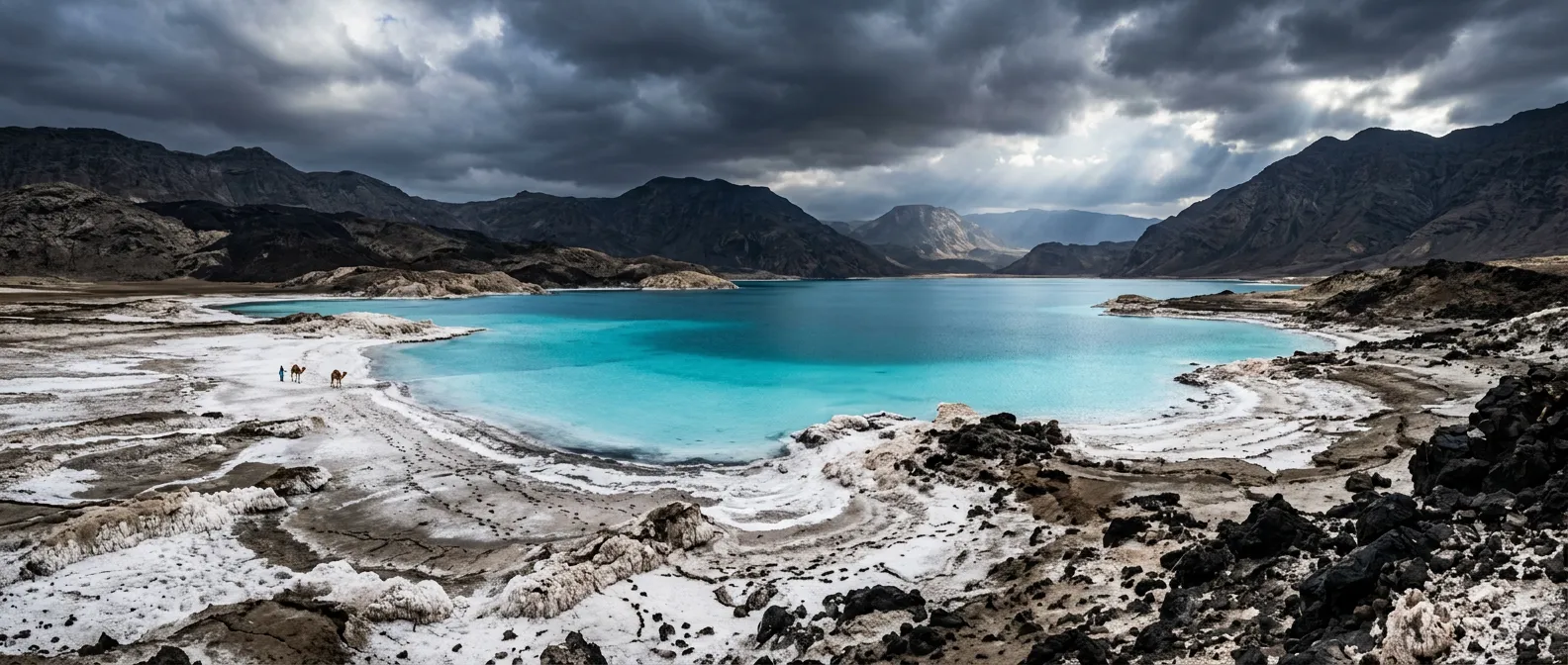
Lake Assal sits at 155 meters below sea level, making it the lowest point in Africa and the third-lowest point on Earth after the Dead Sea and the Sea of Galilee. It is also one of the saltiest bodies of water in the world – ten times saltier than the ocean. The lake is surrounded by black lava fields and white salt flats that stretch to the horizon, creating a landscape that looks more like Mars than Earth.
The drive from Djibouti City takes about two to three hours via the RN1 highway, passing through the town of Dikhil and across a barren volcanic plateau. A 4×4 vehicle is essential – the final stretch is unpaved and rough. There is no infrastructure at the lake itself: no shops, no shade, no toilets. Bring your own water, food, and sun protection.
Swimming in Lake Assal is an unforgettable experience. The extreme salinity means you float effortlessly, similar to the Dead Sea. The water can reach 34 degrees Celsius, and the salt crystals underfoot are sharp – water shoes are recommended.
Lac Abbe (Lake Abbe)
Lac Abbe sits on the Djibouti-Ethiopia border and is one of the most visually striking landscapes on the planet. Hundreds of limestone chimneys, some rising 50 meters high, dot the dried lake bed. Hot springs and steam vents surround them, and the scene looks like something from a science fiction film. The 1968 film “Planet of the Apes” used this location for its iconic final scene.
The chimneys were formed over thousands of years by mineral-rich water rising from underground springs. As the water evaporated, it left behind layers of calcium carbonate that built up into the tall, cone-shaped pillars.
Reaching Lac Abbe requires a full-day excursion or overnight camping trip from Djibouti City. The drive is approximately three to four hours. You must hire a local guide and a 4×4 – there are no marked roads in the final approach. Camping overnight is the best way to experience the site, as the chimneys are spectacular at sunrise and sunset when the light transforms the landscape.
Whale Sharks in the Gulf of Tadjoura
Between October and February, whale sharks gather in the Gulf of Tadjoura to feed on plankton blooms. The Seven Brothers Islands (Iles des Sept Freres) and the area around the Ghoubbet al-Kharab bay are the primary hotspots. Djibouti is one of the most reliable places in the world to swim alongside whale sharks, with encounters nearly guaranteed during peak season.
Day trips depart from the port of Tadjoura or from Djibouti City via boat. Trips typically include snorkeling stops, and the water temperature ranges from 24 to 30 degrees Celsius during whale shark season. Operators provide snorkeling gear, but bringing your own mask and fins is recommended for comfort.
The whale sharks in Djibouti waters are often juveniles, averaging six to eight meters in length. They are generally calm and slow-moving, making this one of the best places in the world for a first-time whale shark encounter.
Day Forest National Park
The Day Forest National Park (Foret du Day) is a remnant of an ancient juniper forest clinging to the slopes of Mount Goda at around 1,500 meters elevation. It is the only significant forest in Djibouti and provides a stark contrast to the surrounding desert. The park is home to several endemic species, including the Djibouti francolin (a bird found nowhere else on Earth) and the recently re-discovered Djibouti spurfowl.
The forest is located near the town of Day in the northern part of the country, about a three-hour drive from Djibouti City. The cooler altitude makes hiking here pleasant even during the hotter months. Trails are basic and unsigned – hiring a local guide from the nearby villages is essential.
Moucha Island and Maskali Island
Moucha Island sits about 15 kilometers offshore from Djibouti City and is the country’s most accessible beach destination. The island has mangrove-lined shores, clear water for snorkeling, and basic facilities. Day trips by boat take about 30 minutes from the old port.
Maskali Island, smaller and less visited, is nearby and offers better snorkeling with less crowding. Neither island has significant tourist infrastructure – bring your own food, water, and shade.
The coral reefs around Moucha and Maskali are home to colorful reef fish, sea turtles, and occasional dolphins. The best visibility is from November to March when plankton levels are lower.
Djibouti City
Djibouti City is small, walkable, and worth a day or two of exploration. Key sights include:
- Marche Central (Central Market) – the city’s bustling main market, selling everything from spices and textiles to frankincense and gold jewelry. Bargaining is expected.
- Hamoudi Mosque – the largest mosque in the city center, an architectural landmark
- The waterfront and port area – where traditional dhows share the harbor with military vessels
- European Quarter – colonial-era French architecture along the main boulevards
- Kempinski and Djibouti Palace hotels – even if you are not staying, the restaurants and bars offer the best views of the Gulf
Best Time to Visit Djibouti
Djibouti has two distinct seasons:
Cool season (October to April): Daytime temperatures range from 25 to 35 degrees Celsius. This is the best time for most activities. November to March is peak season for whale sharks, diving, and general sightseeing. The brief rainy season (called the khareef) occurs from November to January, bringing occasional heavy showers and flash floods in wadis.
Hot season (May to September): Temperatures regularly exceed 40 degrees Celsius and can reach 50 degrees inland. Outdoor activities become dangerous during midday. This is low season for tourism, but hotel prices drop significantly and some travelers find the solitude appealing.
| Month | Temperature | Conditions | Best For |
|---|---|---|---|
| Nov – Feb | 25-30 C | Warm, occasional rain | Whale sharks, diving, sightseeing |
| Mar – Apr | 28-35 C | Hot, dry | Lake Assal, Lac Abbe, trekking |
| May – Sep | 35-50 C | Extreme heat | Budget travel, indoor activities |
| Oct | 28-33 C | Transitional | Shoulder season, good value |
Recommendation: November to February is the best window for most visitors. You get the coolest weather, whale shark season, and good diving conditions.
How to Get to Djibouti
By air: Djibouti-Ambouli International Airport (JIB) is the only international airport. Direct flights operate from:
– Addis Ababa (Ethiopian Airlines, 1.5 hours)
– Dubai (flydubai, 3 hours)
– Istanbul (Turkish Airlines)
– Paris (Air France, seasonal)
– Jeddah, Nairobi, and other regional hubs
Flights from Europe and North America typically connect through Addis Ababa or Dubai.
By land: The main overland entry point is the Loyada border crossing with Ethiopia, located about 30 kilometers from Djibouti City. Shared minibuses run between Addis Ababa and Djibouti City, but the journey takes 12 to 18 hours and the road quality varies. The border with Somalia at Loyada is not an official crossing for most nationalities.
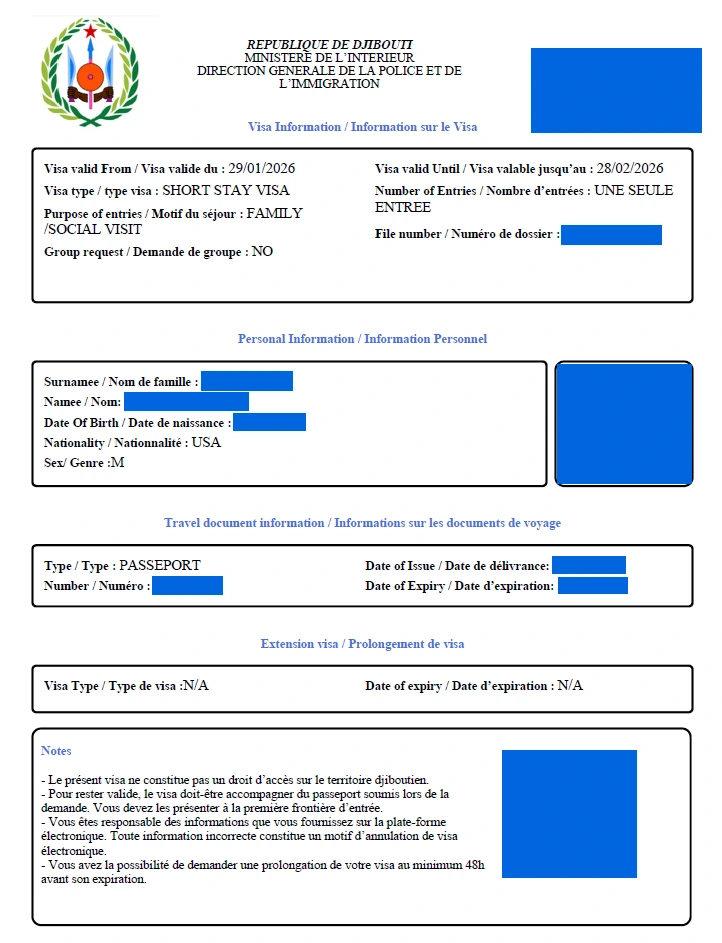
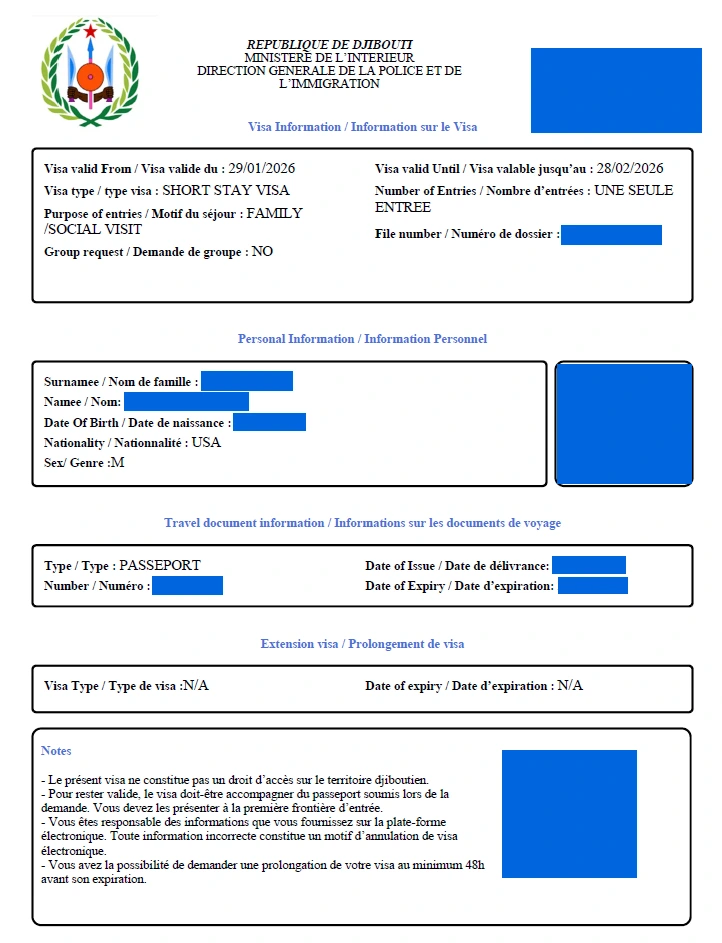
Visa: Most nationalities need a visa. The fastest option is the electronic visa (eVisa) through the official portal at evisa.gouv.dj. A short-stay eVisa costs $23 USD and is valid for up to 90 days. Processing takes four to seven business days. For complete details, see our Djibouti eVisa guide and visa requirements pages.
Getting Around Djibouti
Public transport in Djibouti is limited. Here are your options:
Taxis: Taxis in Djibouti City are abundant and cheap. Fares within the city range from 500 to 1,500 DJF ($3 to $8 USD). There are no meters – agree on the price before getting in. Shared taxis (called taxi-brousse) are the cheapest option but are crowded and follow no fixed schedule.
Hiring a 4×4 with driver: This is the standard way to visit Lake Assal, Lac Abbe, and other out-of-city attractions. Prices range from $150 to $250 USD per day depending on the destination and duration. Hotels and guesthouses in Djibouti City can arrange drivers and guides. Do not attempt to self-drive outside the city – roads are unpaved, unsigned, and GPS coverage is unreliable.
Organized tours: Several local operators offer multi-day packages combining Lake Assal, Lac Abbe, whale shark snorkeling, and Day Forest. A three to five day tour package typically costs $500 to $1,000 USD per person including transport, guide, and camping equipment.
Domestic flights: There are no scheduled domestic flights in Djibouti.
Where to Stay in Djibouti
Accommodation options are concentrated in Djibouti City:
| Category | Examples | Price Range (per night) |
|---|---|---|
| Luxury | Kempinski, Djibouti Palace | $200-400 USD |
| Mid-range | Hotel Residence l’Europe, Hotel Meira | $80-150 USD |
| Budget | Guesthouses, auberges | $30-60 USD |
| Camping | Lac Abbe, Lake Assal (wild camping) | Free (bring your own gear) |
Tips:
– Book mid-range and luxury hotels in advance, as options are limited
– Budget guesthouses are not always listed online – walk-in availability is common
– For Lac Abbe overnight trips, camping is the only option – tour operators provide tents
– Air conditioning is essential during the hot season (May-September)
Djibouti Food and Culture
Djiboutian cuisine reflects its Somali, Afar, Yemeni, and French influences. Staple dishes include:
- Skudahkharis – a spiced lamb and rice dish, the national meal
- Laxoox – a spongy, sourdough flatbread similar to Ethiopian injera, eaten with stews
- Fah-fah – a slow-cooked lamb soup with vegetables and spices
- Djiboutian tea (shaah) – strong, sweet tea with cardamom and sometimes ginger, served throughout the day
- French bakeries – a legacy of colonial rule; baguettes and pastries are widely available
Seafood is fresh and abundant along the coast – grilled fish, lobster, and shrimp are common at waterfront restaurants.
Cultural etiquette:
– Djibouti is a Muslim-majority country. Dress modestly, especially outside hotel areas and beach resorts
– Remove shoes before entering homes and mosques
– Ask permission before photographing people
– Avoid eating, drinking, or smoking in public during Ramadan
– Alcohol is available in hotels and some restaurants but not widely sold
Practical Travel Tips
Money: The Djiboutian Franc (DJF) is pegged to the US dollar at approximately 177 DJF = 1 USD. US dollars and euros are widely accepted at hotels and larger shops. ATMs exist in Djibouti City but are unreliable and may not accept all international cards. Carry enough cash for your entire trip, especially outside the capital.
SIM cards and connectivity: Djibouti has two mobile operators – Djibouti Telecom (the state monopoly) and EVC (Ethio Telecom roaming). A local SIM card costs around 1,000 DJF ($6 USD) and can be purchased at the airport or at Djibouti Telecom offices in the city. Data coverage is limited to Djibouti City and main highways – do not expect connectivity in remote areas like Lac Abbe or Lake Assal.
Packing essentials:
– Lightweight, loose-fitting clothing in light colors
– Wide-brimmed hat and high-SPF sunscreen
– Reusable water bottle (3-4 liters capacity)
– Water shoes for Lake Assal
– Snorkeling gear (if visiting the islands)
– Portable battery pack (charging options are limited outside hotels)
– Copies of passport and eVisa printout
– Mosquito repellent and antimalarial medication
– Cash in USD or EUR as backup
Health: Yellow fever vaccination is required if arriving from a country with yellow fever transmission. Hepatitis A, typhoid, and rabies vaccinations are recommended. Drink only bottled or purified water. Travel insurance with medical evacuation coverage is essential – medical facilities in Djibouti are basic, and serious emergencies require evacuation to Addis Ababa or Nairobi.
Safety: Djibouti is one of the safer countries in the Horn of Africa. Petty crime exists in urban areas but violent crime against tourists is rare. The main risks are extreme heat, road accidents, and border-region instability. For a detailed safety overview, see our guide on Djibouti travel safety.
Language: French and Arabic are the official languages. Somali and Afar are widely spoken at the community level. English is spoken at international hotels and by some tour operators, but not in general. Learning basic French phrases will significantly improve your experience.
Suggested Djibouti Itinerary (5-7 Days)
This itinerary covers the country’s highlights in a manageable timeframe:
| Day | Activity | Overnight |
|---|---|---|
| 1 | Arrive Djibouti City, explore Marche Central, waterfront | Djibouti City |
| 2 | Day trip to Moucha Island – snorkeling, beach | Djibouti City |
| 3 | Drive to Lake Assal via Dikhil – swim, explore salt flats | Djibouti City |
| 4 | Full-day excursion to Lac Abbe – chimneys, hot springs, camping | Camp at Lac Abbe |
| 5 | Sunrise at Lac Abbe, return to Djibouti City | Djibouti City |
| 6 | Whale shark snorkeling (seasonal, Nov-Feb) or Day Forest trek | Djibouti City |
| 7 | Departure day, final city exploration | – |
Budget estimate: A five-day independent trip (mid-range accommodation, 4×4 hire for two days, whale shark trip, meals) costs approximately $800 to $1,200 USD per person. Budget travelers can reduce this to $500 to $700 by staying in guesthouses and joining group tours.
Getting Your Djibouti Visa
Before you travel, you will need a visa unless you hold a passport from one of the few visa-exempt countries. The easiest option is the Djibouti eVisa, which you can apply for entirely online through the official government portal.
The eVisa costs $23 USD for a short-stay visa (up to 90 days) or $12 USD for a transit visa (up to 14 days). Processing takes four to seven business days. You will need a valid passport with at least six months remaining validity, a recent passport-style photo, and a credit or debit card for payment.
For the complete step-by-step application process, see our Djibouti visa application guide. If you need to understand all visa types available, our Djibouti visa types page covers tourist, business, and transit options.
FAQs About Djibouti Travel
Is Djibouti worth visiting?
Djibouti is worth visiting for travelers who want unique geological landscapes, world-class whale shark encounters, and an off-the-beaten-path experience in the Horn of Africa. It is not a typical beach or safari destination, but the landscapes at Lake Assal and Lac Abbe are unlike anything else on the continent. Expect limited infrastructure and higher prices than neighboring countries.
How many days do you need in Djibouti?
Five to seven days is enough to see the main attractions: Lake Assal, Lac Abbe, whale shark snorkeling (in season), and Djibouti City. Three days is the minimum for a quick visit covering Lake Assal and the city. Ten days allows for slower travel and deeper exploration of Day Forest and the northern regions.
Is Djibouti expensive to visit?
Djibouti is more expensive than most East African countries. Mid-range hotels cost $80 to $150 per night, and a day trip with 4×4 hire can cost $150 to $250. Budget travelers can manage on $60 to $80 per day by staying in guesthouses, eating at local restaurants, and joining group tours. Luxury travelers should budget $300 or more per day.
Do I need a visa to visit Djibouti?
Yes, most nationalities need a visa. The easiest option is the eVisa, available online through the official portal at evisa.gouv.dj. The fee is $23 USD for a short-stay visa (up to 90 days). Processing takes four to seven business days. See our Djibouti visa requirements page for country-specific details.
What is the best month to visit Djibouti?
November is the best single month to visit. It marks the start of the cool season with comfortable temperatures (25-30 C), the beginning of whale shark season, and good diving visibility. December through February are equally good, though the brief khareef rains may bring occasional heavy showers.
Is it safe to travel to Djibouti?
Djibouti is one of the safer countries in the Horn of Africa. Petty crime occurs in urban areas but violent crime against tourists is rare. The main risks are extreme heat, road accidents, and instability in border regions. The US State Department rates Djibouti as Level 2 (Exercise Increased Caution). See our Djibouti travel safety guide for detailed information.
Can I swim in Lake Assal?
Yes, swimming in Lake Assal is one of the highlights of visiting Djibouti. The extreme salinity (ten times saltier than the ocean) means you float effortlessly. The water can be warm (up to 34 C). Wear water shoes to protect your feet from sharp salt crystals on the lakebed. Rinse off with fresh water afterward – there are no facilities at the lake, so bring your own.
What language do they speak in Djibouti?
French and Arabic are the official languages. Somali (Issa dialect) and Afar are the most widely spoken local languages. English is limited to international hotels and some tour operators. Learning basic French phrases will help significantly, especially outside Djibouti City.
Can you drink tap water in Djibouti?
No. Tap water in Djibouti is not safe for visitors to drink. Stick to bottled water or water that has been purified or boiled. Carry at least three to four liters of water per day, especially when visiting outdoor attractions like Lake Assal and Lac Abbe where there are no shops or water sources.
What is the currency in Djibouti?
The Djiboutian Franc (DJF) is the local currency, pegged to the US dollar at approximately 177 DJF to 1 USD. US dollars and euros are widely accepted at hotels and larger shops. ATMs exist in Djibouti City but are unreliable and may not accept all international cards. Carry sufficient cash for your entire trip.