The Djibouti eVisa is a fully online electronic travel authorization that lets eligible foreign nationals enter Djibouti for short stays of up to 14 or 30 days without visiting an embassy or consulate. Whether you are travelling for tourism, business, transit, or a family visit, the eVisa streamlines the entire visa process into a few simple steps completed from anywhere in the world.
This guide covers everything you need to know – from visa types and document requirements to fees, processing times, and frequently asked questions.
What Is the Djibouti eVisa?
The Djibouti eVisa (Electronic Visa) is an official travel document issued by the Republic of Djibouti that grants permission to enter the country for a limited period. Introduced to modernise Djibouti’s immigration process, the eVisa eliminates the need for in-person visits to embassies or consulates.
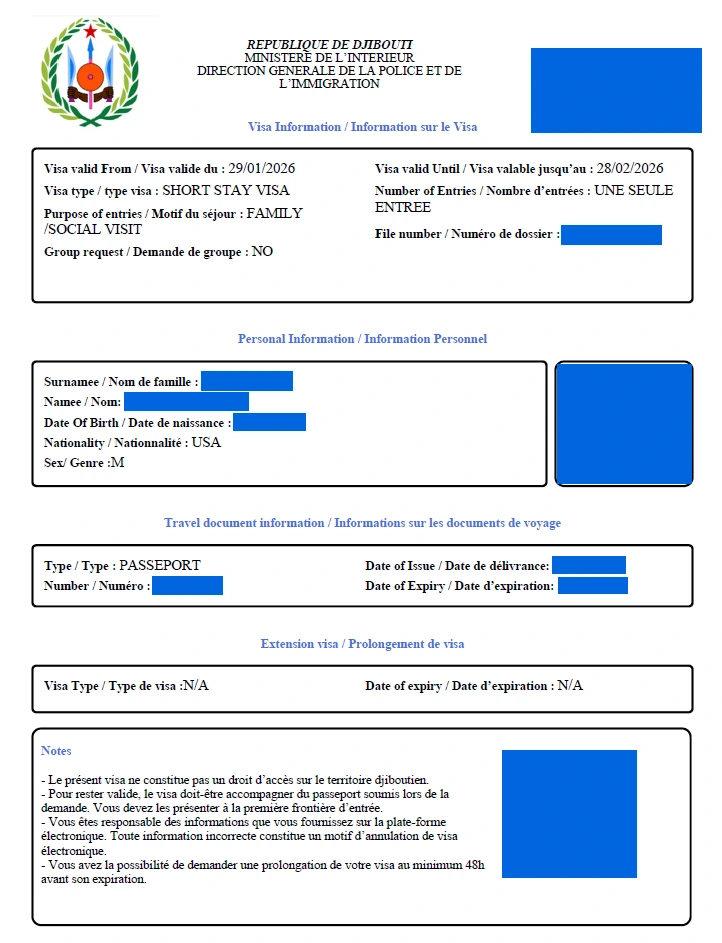
Applicants complete the entire process online through the official eVisa portal: fill out a form, upload supporting documents, pay the fee, and receive the approved eVisa by email. Upon arrival in Djibouti, travellers present a printed copy of their eVisa along with their passport for immigration verification.
The eVisa system is designed for short-term stays only. It does not permit employment, paid work, or long-term residence in Djibouti. Travellers seeking work permits or residency must apply through the appropriate immigration or labour authorities separately.
Types of Djibouti eVisa
Djibouti offers four distinct eVisa categories, each tailored to a specific travel purpose. All eVisa types are single-entry permits.
Transit eVisa
The Transit eVisa is designed for travellers passing through Djibouti on their way to a third destination. It allows a stay of up to 14 days, giving transit passengers enough time to rest, make overnight stops, or catch connecting transport.
- Validity: 14 days
- Stay duration: 14 days
- Entries: Single
- Permitted activities: Short stays during transit, overnight accommodation, brief stopovers connected to onward travel
Tourism eVisa
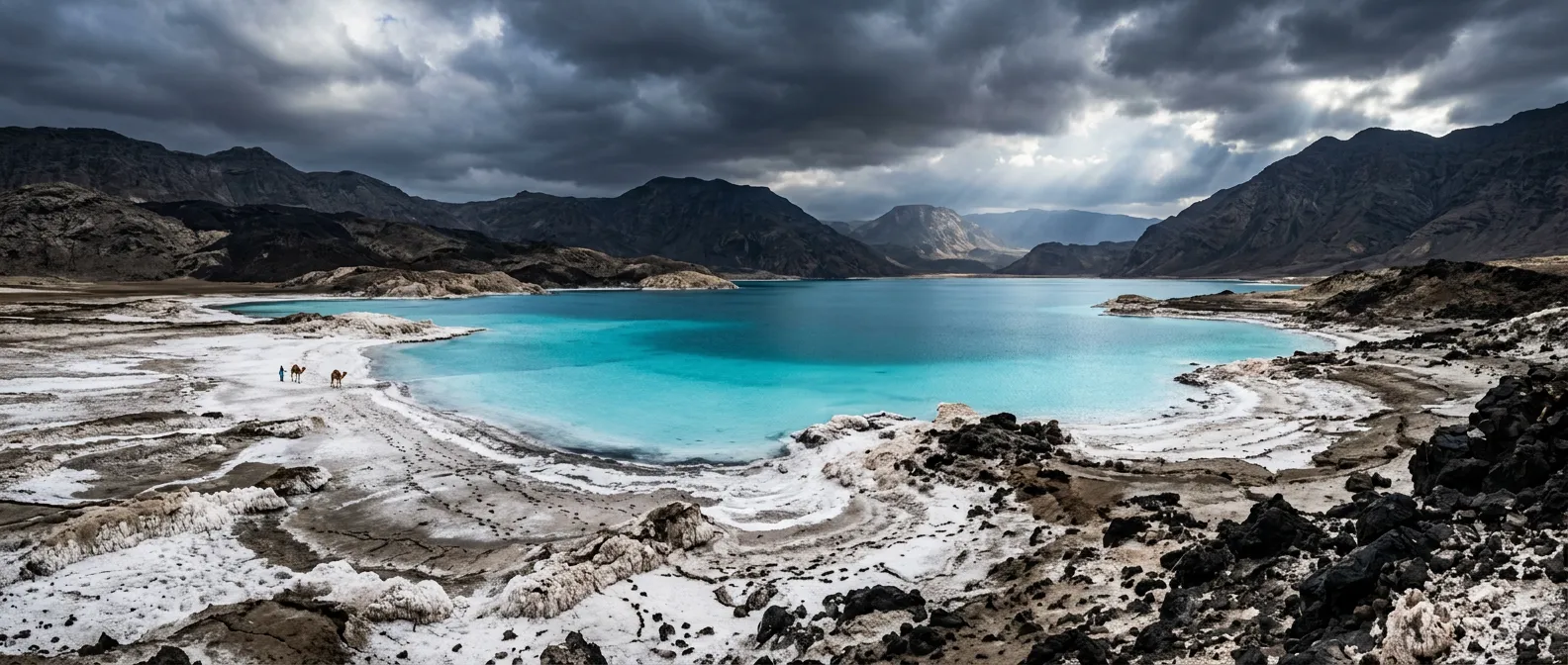
The Tourism eVisa is the most popular option, allowing foreign nationals to visit Djibouti for leisure and sightseeing. Holders can explore Djibouti’s natural attractions – from the otherworldly Lac Assal (the lowest point in Africa) to the Day Forest National Park and the Gulf of Tadjoura’s coral reefs.
- Validity: 30 days
- Stay duration: 30 days
- Entries: Single
- Permitted activities: Holiday travel, sightseeing, cultural visits, beach and nature excursions, visiting friends or family
Family/Social Visit eVisa
This visa is for travellers who plan to visit family members or friends residing in Djibouti. It is ideal for attending family events, reunions, or cultural gatherings.
- Validity: 30 days
- Stay duration: 30 days
- Entries: Single
- Permitted activities: Meeting family or friends, attending family events, social and cultural activities
Business eVisa
The Business eVisa allows professionals and entrepreneurs to enter Djibouti for short-term business activities. This is the right choice if you are attending conferences, negotiating deals, or meeting with Djiboutian companies.
- Validity: 30 days
- Stay duration: 30 days
- Entries: Single
- Permitted activities: Business meetings, conferences, trade negotiations, professional visits
Who Needs a Djibouti eVisa?
The Djibouti eVisa is available to citizens of a wide range of countries worldwide. Most nationalities – including travellers from the United States, United Kingdom, Canada, Australia, India, and the European Union – are eligible to apply.
A small number of countries have visa-free access to Djibouti and do not need an eVisa. If your nationality qualifies for visa-free entry, you can travel without applying in advance.
To check your eligibility, visit the official eVisa portal and select your nationality from the list. The system will immediately tell you whether you need an eVisa or qualify for visa-free entry.
Important: Even if you hold dual citizenship, you must apply using the passport you will use to enter Djibouti. Your eVisa is linked to a specific passport number.
Djibouti eVisa Requirements
Before starting your application, gather the following documents. All scans and photos must be clear, high-resolution, and free of glare or shadows.
Required Documents (All Visa Types)
1. Passport Biopage Scan
Upload a clear scan of your passport’s biodata page. Your passport must:
- Be valid for at least 6 months from your planned arrival date in Djibouti
- Have at least 2 blank pages for entry and exit stamps
- Show the entire biodata page and MRZ code clearly
- Be undamaged and in good condition
2. Applicant Digital Photo
A recent passport-style photograph taken within the last six months. Requirements:
- Colour photo with a white or light background
- High resolution with sharp focus
- Full face visible, looking directly at the camera
- No heavy shadows, filters, or obstructions
3. Accommodation Proof
You must provide one of the following:
- A confirmed hotel booking showing the hotel name, your name, and stay dates
- An invitation letter from a host in Djibouti, including their full name, contact details, the address where you will stay, and your travel dates
4. Confirmed Travel Ticket
A flight ticket or reservation showing at least one of:
- Entry into Djibouti
- Exit from Djibouti
- Onward travel to another destination
A round-trip ticket is also acceptable.
Additional Requirement for Transit eVisa
Transit eVisa applicants must also provide an onward travel ticket or visa for the next destination, proving that Djibouti is a stopover rather than the final destination.
How to Apply for a Djibouti eVisa
The application process is straightforward and can be completed in four steps:
Step 1: Fill Out the Application Form
Visit the official eVisa portal and complete the online form. You will need to enter:
- Personal details (full name, date of birth, nationality)
- Passport information (number, expiry date)
- Travel details (arrival date, accommodation)
- Selected eVisa type
Double-check all information against your passport. Mismatches between your application and passport details are a common cause of delays or rejections.
Step 2: Upload Supporting Documents
Upload clear scans or photos of:
- Passport biopage
- Digital photograph
- Hotel booking or invitation letter
- Flight ticket or reservation
- Onward travel proof (for transit eVisa only)
Step 3: Pay the Visa Fee
Pay using one of the accepted methods:
- Credit or debit card (international-enabled)
- PayPal
- Cryptocurrency
- Bank transfer (upon request)
Step 4: Receive Your eVisa
Once approved, the eVisa is delivered to your registered email address. Print a copy and carry it with your passport for presentation at Djibouti immigration.
Djibouti eVisa Fees and Processing Times
The total eVisa fee consists of a government-imposed visa cost plus a service fee for application handling and review. The exact amount depends on your nationality and the visa type selected.
Processing Speed Options
Fee Structure
The total cost is calculated per applicant:
Visa Cost + Service Fee + Rush Fee (if selected)
- Visa Cost: Official government charge for processing and issuing the eVisa
- Service Fee: Covers application handling, document review, and submission support
- Rush/Super-Rush Fee: Optional; only added when faster processing is selected
Note: Your bank or card issuer may apply additional currency conversion or transaction fees. These are outside the control of the eVisa system.
Important Fee Policies
- All fees are non-refundable, regardless of application outcome
- Each traveller (including minors) requires a separate eVisa and separate fee
- Fees are per-traveller, not per application
- Fees are non-transferable between applicants
- If your application is refused, you must pay the full fee again to reapply
eVisa vs Visa on Arrival
Djibouti previously offered visa-on-arrival services at the airport and major border crossings. While this option may still exist, the eVisa system offers several advantages:
The eVisa removes uncertainty from the arrival process. With an approved eVisa in hand, you pass through immigration faster and with confidence that your entry is pre-authorised.
Benefits and Limitations of the eVisa
Benefits
- 100% online process – no embassy visits, no邮寄 documents
- Multiple processing speeds – standard, rush, and super-rush options
- Multiple payment methods – card, PayPal, crypto, bank transfer
- Pre-approved entry – know your visa status before you travel
- 24/7 support – customer assistance available throughout the process
Limitations
- Single-entry only – if you leave Djibouti, you cannot re-enter on the same eVisa
- No employment permitted – the eVisa does not allow work or paid employment
- No guaranteed extension – visa extensions are not automatic and granted only in limited cases
- Non-refundable fees – you cannot recover costs if your application is denied
- Short-term stays only – maximum 30 days for most visa types
Common Mistakes to Avoid
Avoid these frequent errors that can delay or derail your Djibouti eVisa application:
-
Passport validity too short. Your passport must be valid for at least 6 months from your arrival date. Check this before applying.
-
Mismatched information. The details in your application must exactly match your passport. Even small discrepancies (middle names, date formats) can cause issues.
-
Poor document quality. Blurry scans, glare on the passport biopage, or photos with shadows will be rejected. Upload clear, high-resolution images.
-
Wrong visa type selected. Choose the correct category for your trip purpose. Applying for a tourism eVisa when you are attending business meetings could cause problems at immigration.
-
Forgetting to print the eVisa. You must carry a printed copy of your approved eVisa. Digital copies on your phone may not be accepted at immigration.
-
Not having onward proof for transit. Transit eVisa applicants must show an onward ticket or visa for the next destination. Without this, the application will be incomplete.
-
Assuming the eVisa allows work. It does not. If you plan to work in Djibouti, you need a separate work permit obtained through the proper authorities.
FAQs About the Djibouti eVisa
How long does it take to get a Djibouti eVisa?
Standard processing takes 4-7 working days. Rush processing (3-5 days) costs an additional $99, and super-rush processing (2-4 days) costs an additional $299.
Can I extend my Djibouti eVisa?
eVisa extensions are not automatic and may be granted only in limited cases by Djibouti immigration authorities after arrival. Online extension is not available. If you need a longer stay, contact local immigration authorities.
Do children need a separate eVisa?
Yes. All travellers, including minors and infants, must have their own individual Djibouti eVisa. A separate fee applies for each applicant.
Can I work in Djibouti with an eVisa?
No. The Djibouti eVisa does not permit employment, paid work, or long-term residence. You must apply for a work permit through the appropriate authorities if you plan to work in Djibouti.
What happens if I overstay my eVisa?
Overstaying your eVisa validity period is a serious immigration violation. Penalties can include fines, detention, deportation, and bans on future entry to Djibouti. Always plan your departure within the authorised stay period.
Can I change my eVisa type after applying?
The eVisa type can be changed only if the application has not yet entered processing. Changes may require additional documents and extra fees. Contact support immediately if you need to change your visa type.
What payment methods are accepted?
You can pay using a credit or debit card authorised for international transactions, PayPal, cryptocurrency, or bank transfer (upon request).
Is the eVisa fee refundable if my application is denied?
No. All eVisa fees are non-refundable regardless of the application outcome. This includes cases where the application is refused, withdrawn, or cancelled after submission.
Can I enter Djibouti multiple times on one eVisa?
No. All Djibouti eVisa types are single-entry permits. If you leave Djibouti and wish to return, you must apply for a new eVisa.
What should I do if my eVisa application is rejected?
If your application is denied, review the reason for rejection (if provided), correct any issues, and submit a new application with the full fee. Common rejection reasons include incomplete documents, passport validity issues, and mismatched information.
Conclusion
The Djibouti eVisa simplifies travel to this strategically located East African nation. With a fully online application, multiple visa categories, and flexible processing speeds, most travellers can secure their entry authorization without leaving home. Ensure your passport is valid, gather your documents, choose the right visa type, and apply with enough lead time before your trip.
For the most current information on fees, eligibility, and processing times, always check the official Djibouti eVisa portal before applying.