
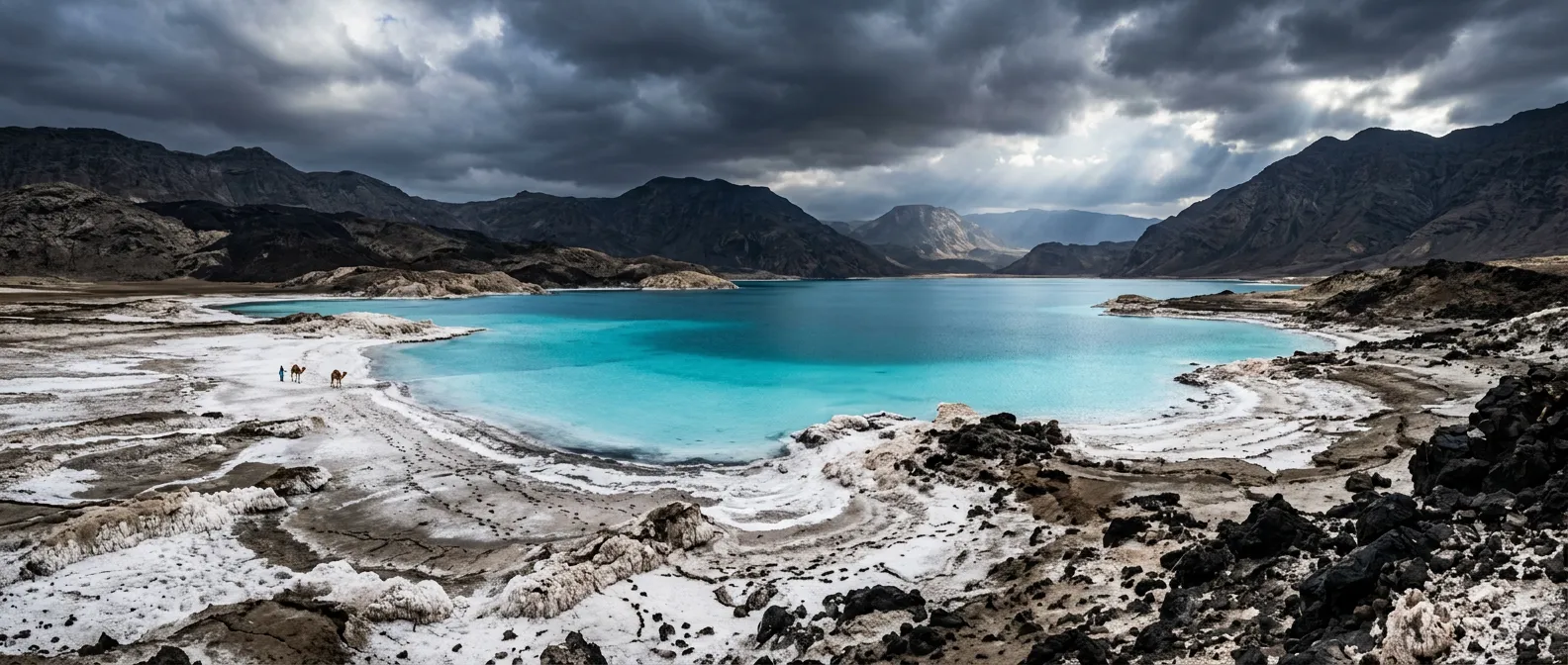
Djibouti is generally safe for foreign travelers compared to many of its neighbors in the Horn of Africa. The country maintains a stable government, hosts multiple foreign military bases, and sees a steady flow of business and transit visitors. Petty crime exists in urban areas, but violent crime against tourists is rare. The biggest risks are border-region instability, extreme heat, and road safety – not crime.
Is Djibouti Safe for Tourists?
Djibouti is one of the safer countries in the Horn of Africa. The government maintains tight security, and the presence of French, American, Chinese, and Japanese military bases adds an extra layer of stability in and around the capital.
That said, Djibouti is not crime-free. Petty theft, pickpocketing, and opportunistic crime occur in crowded areas of Djibouti City, particularly around the central market (Marche Central) and the port district. Bag snatching and car break-ins are the most common incidents reported by visitors.
Overall safety assessment:
| Safety Factor | Rating | Notes |
|---|---|---|
| Violent crime against tourists | Low | Rare, but not unheard of at night |
| Petty crime (pickpocketing, bag theft) | Moderate | Common in busy markets and port areas |
| Terrorism risk | Low to Moderate | Regional threat exists; military presence deters attacks |
| Political stability | Moderate | Generally stable; occasional protests |
| Road safety | Low (poor) | Major risk; reckless driving is common |
| Natural hazards | Moderate | Extreme heat, flash floods in rainy season |
| Scams targeting tourists | Moderate | Overcharging at markets and with taxis |
Crime in Djibouti
Crime levels in Djibouti are moderate by regional standards. The most common crimes affecting visitors are non-violent:
Petty crime:
– Pickpocketing in markets and busy streets
– Bag snatching, especially after dark
– Car break-ins (do not leave valuables visible)
– Overcharging and shortchanging at informal vendors
Areas to be cautious:
– Marche Central (central market) – crowded, pickpocketing risk
– The waterfront/port area after dark
– Poorly lit neighborhoods in Djibouti City at night
– The border areas with Eritrea, Ethiopia, and Somalia
Areas generally safe:
– Hotel districts and expat neighborhoods
– Areas near military installations
– Djibouti-Ambouli Airport and surroundings
– Popular tourist sites like Lake Assal during daytime
The Djiboutian police are generally present in the capital but may not be responsive to minor tourist complaints. Violent muggings and armed robbery are uncommon but have been reported in isolated incidents, particularly at night in less-traveled areas.
Terrorism and Regional Security
Djibouti faces indirect terrorism risk due to its location. Somalia lies to the southeast, and the militant group Al-Shabaab has carried out attacks in the broader region. Djibouti itself experienced a suicide bombing in 2014 at a restaurant frequented by Westerners.
However, the extensive foreign military presence (Camp Lemonnier is the largest US base in Africa) means security forces are active and well-equipped. Security checkpoints are common on roads and at key installations.
Border regions to avoid:
– The border with Eritrea – tensions remain, and the area is heavily militarized
– The border with Somalia – Al-Shabaab activity in the region
– The border with northern Ethiopia – periodic instability related to regional conflicts
The UK Foreign Office, US State Department, and other governments generally advise exercising increased caution in Djibouti overall and avoiding border regions entirely.
Health and Medical Safety
Health risks are a bigger concern for travelers than crime in Djibouti.
Key health risks:
| Health Concern | Risk Level | Prevention |
|---|---|---|
| Malaria | Moderate | Antimalarial medication recommended; use mosquito nets and repellent |
| Dengue fever | Low to Moderate | Mosquito bite prevention |
| Schistosomiasis | Moderate | Avoid swimming in fresh water (Lac Assal is salt, generally safe) |
| Heat-related illness | High | Hydrate constantly; avoid midday sun |
| Water-borne illness | High | Drink only bottled or purified water |
| Respiratory infections | Moderate | Dust and sand in dry season |
Medical facilities:
– Hospital facilities in Djibouti City are basic. The Hopital General Peltier is the main public hospital.
– The Bouffard French Military Hospital can sometimes assist foreign nationals in emergencies.
– For serious medical emergencies, evacuation to Addis Ababa, Nairobi, or Europe may be required.
– Travel insurance with medical evacuation coverage is essential.
Required and recommended vaccinations:
– Yellow fever vaccination is required if arriving from a country with yellow fever transmission
– Hepatitis A and B, typhoid, and rabies vaccinations are recommended
– Routine vaccinations (MMR, tetanus, polio) should be up to date
Extreme Heat and Climate Dangers
Djibouti is one of the hottest countries on Earth. Heat is the most underestimated safety risk for visitors.
Temperature ranges:
– October to April: 25-35 degrees C (77-95 degrees F)
– May to September: 35-50 degrees C (95-122 degrees F)
– Inland desert areas can exceed 50 degrees C in summer
Heat safety tips:
– Drink at least 3-4 liters of water daily; more if active outdoors
– Avoid outdoor activity between 11:00 and 16:00 during hot months
– Wear loose, light-colored clothing and a wide-brimmed hat
– Carry oral rehydration salts as a precaution
– Never leave children or pets in parked vehicles
Flooding: The “khareef” rainy season (November to January) can bring flash floods, especially in wadis (dry riverbeds) and low-lying areas. Avoid camping or driving in wadis during or after rain.
Road Safety and Transportation
Road safety is one of Djibouti’s biggest risks. Traffic fatalities are common.
Key road hazards:
– Reckless and aggressive driving is widespread
– Many vehicles are poorly maintained and lack functioning lights
– Roads outside Djibouti City are often unpaved and poorly marked
– Livestock (camels, goats) regularly cross roads, especially at dawn and dusk
– Night driving is extremely dangerous on rural roads
Recommendations:
– Hire a local driver rather than self-driving
– Use seat belts at all times
– Avoid travel between cities after dark
– Carry extra water, a spare tire, and a satellite phone on long drives
Taxis: Use only official taxis or hotel-arranged transport. Agree on the fare before departure, as meters are not used. Shared taxis (“taxi-brousse”) are cheap but crowded and driven recklessly.
Safety for Solo and Female Travelers
Solo travelers: Djibouti is manageable for experienced solo travelers, but the lack of tourist infrastructure (limited signage, few English speakers, unreliable transport) means preparation is essential. Hiring a local guide is strongly recommended.
Female travelers: Women traveling alone may attract unwanted attention, including verbal harassment. This is more common outside hotel and expat areas. Practical precautions:
– Dress conservatively, especially outside the capital
– Avoid walking alone at night
– Use hotel-arranged transport rather than hailing taxis on the street
– Stay in well-reviewed hotels with security
Water and Beach Safety
Djibouti’s coastline and the Gulf of Tadjoura are popular for diving and snorkeling, but safety varies:
- Swimming in the sea: Currents can be strong, especially around the Bab el-Mandeb strait. Swim only at known safe beaches.
- Scuba diving: Use only licensed dive operators. Popular sites include the Whale Shark Islands (Seven Brothers Islands) and the Ghoubbet al-Kharab bay. Water temperatures vary (22-30 degrees C) and currents can be unpredictable.
- Lake Assal: The salt lake itself is safe for floating but the surrounding area is remote with no facilities. Bring water and sun protection.
- Lac Abbe: Remote and surreal landscape; visit only with an organized tour. The area near the Ethiopian border requires awareness of regional security conditions.
Scams and Common Problems
While Djibouti is not a high-scam destination, visitors should watch for:
- Taxi overcharging: Agree on a price before getting in. Typical rides within Djibouti City should cost 500-1500 DJF ($3-8 USD).
- Market overcharging: Bargaining is expected at Marche Central; initial prices may be 2-3x the fair price for tourists.
- Fake guides: Unofficial “guides” may approach at tourist sites and demand payment afterward. Confirm guide credentials and price upfront.
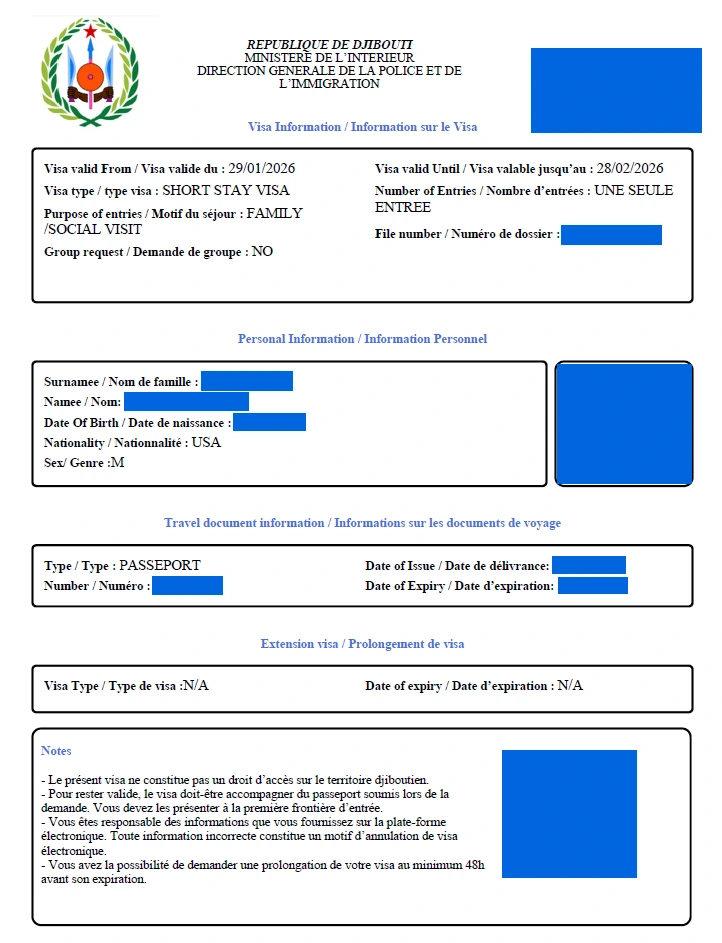
- Visa scams: Apply only through the official government portal at evisa.gouv.dj. Third-party sites charge inflated fees. For guidance, see our Djibouti visa application guide.
- ATM issues: ATMs exist in Djibouti City but are unreliable and may not accept all international cards. Carry sufficient US dollars or euros in cash.
Emergency Contacts in Djibouti
| Service | Number |
|---|---|
| Police | 17 |
| Fire | 18 |
| Ambulance | 35 13 40 |
| Gendarmerie | +253 21 35 39 95 |
| US Embassy Djibouti | +253 21 45 30 00 |
| French Embassy Djibouti | +253 21 35 38 00 |
The US Embassy is located on Boulevard du Marechal Joffre in Djibouti City. The French Embassy is nearby. Both can assist citizens with emergencies, evacuations, and lost passports.
Practical Safety Tips for Djibouti
- Register with your embassy before traveling. The US State Department’s STEP program and similar services for other nationalities help your government locate you in an emergency.
- Carry copies of your passport and visa – keep originals in a hotel safe. Apply for your e-Visa in advance to avoid immigration delays.
- Keep a low profile – avoid displaying expensive jewelry, cameras, or electronics in crowded areas.
- Respect local customs – Djibouti is a Muslim-majority country. Dress modestly, especially away from hotel areas. Avoid public displays of affection.
- Avoid photography near military installations – this includes Camp Lemonnier, government buildings, and the port. Photography is prohibited and can result in detention.
- Stay hydrated – always carry water, even on short outings.
- Travel insurance – non-negotiable. Ensure it covers medical evacuation, as Djibouti’s medical facilities are limited.
- Download offline maps – internet connectivity is limited outside the capital.
FAQs About Djibouti Safety
Is Djibouti safe for Americans?
Djibouti is generally safe for American travelers. The US maintains its largest African military base (Camp Lemonnier) in Djibouti, and the US Embassy provides consular support. The US State Department rates Djibouti as Level 2 (Exercise Increased Caution), mainly due to crime and terrorism risks in border areas.
Is it safe to walk around Djibouti City?
Walking in central Djibouti City and hotel districts during the day is generally safe. Avoid walking alone after dark, particularly in poorly lit areas, near the port, or around the central market. Use taxis for evening travel.
Is Djibouti safer than Somalia or Ethiopia?
Yes, Djibouti is significantly more stable and safer than Somalia and many parts of Ethiopia. The country has avoided the civil conflicts and large-scale violence that have affected its neighbors. However, border areas should still be avoided.
Can you drink tap water in Djibouti?
No. Tap water in Djibouti is not safe for visitors to drink. Stick to bottled water or water that has been purified or boiled. Ice in drinks at reputable hotels is generally safe but ask if unsure.
Do I need a bodyguard or security escort in Djibouti?
Most tourists and business travelers do not need a bodyguard. Standard precautions – avoiding risky areas, using reputable transport, and staying aware of surroundings – are sufficient. Some organizations provide security escorts for travel to border regions, which tourists should generally avoid anyway.
Is Djibouti safe for LGBTQ+ travelers?
Homosexuality is illegal in Djibouti and punishable by imprisonment. LGBTQ+ travelers should exercise extreme discretion and avoid any public displays of same-sex affection. This is a serious legal risk, not just a social one.
What is the biggest safety risk in Djibouti?
For most travelers, the biggest safety risks are extreme heat and road traffic accidents, not crime. Dehydration and heatstroke are common, and driving standards are poor. Travel insurance, hydration, and hiring local drivers are the most effective mitigations.
Is Djibouti safe to visit in 2025 and 2026?
Djibouti remains safe for tourists in 2025-2026 with normal precautions. The security situation has been stable for several years. Check your government’s travel advisory before departure for the latest updates, and [ensure your visa is in order](https://evisa-djibouti.info/djibouti-visa-requirements/) before traveling.